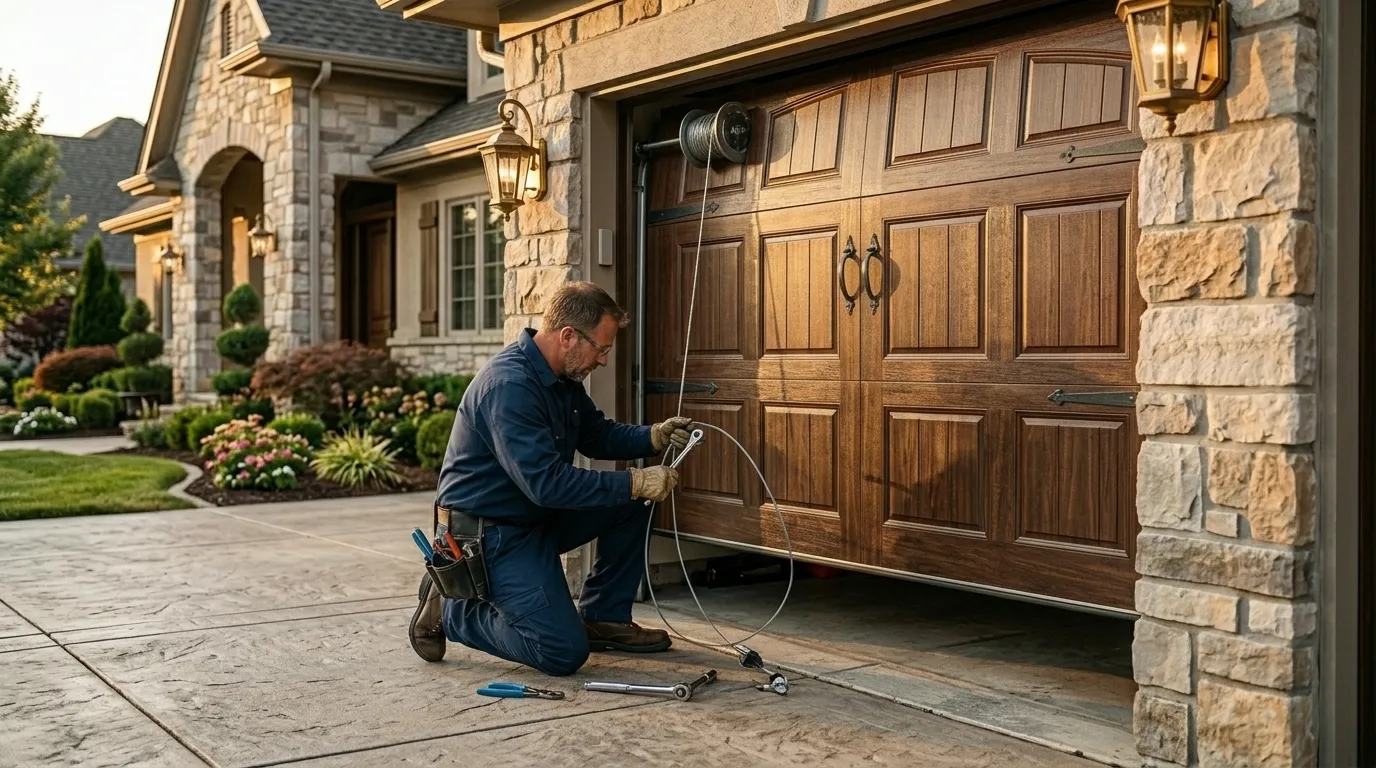
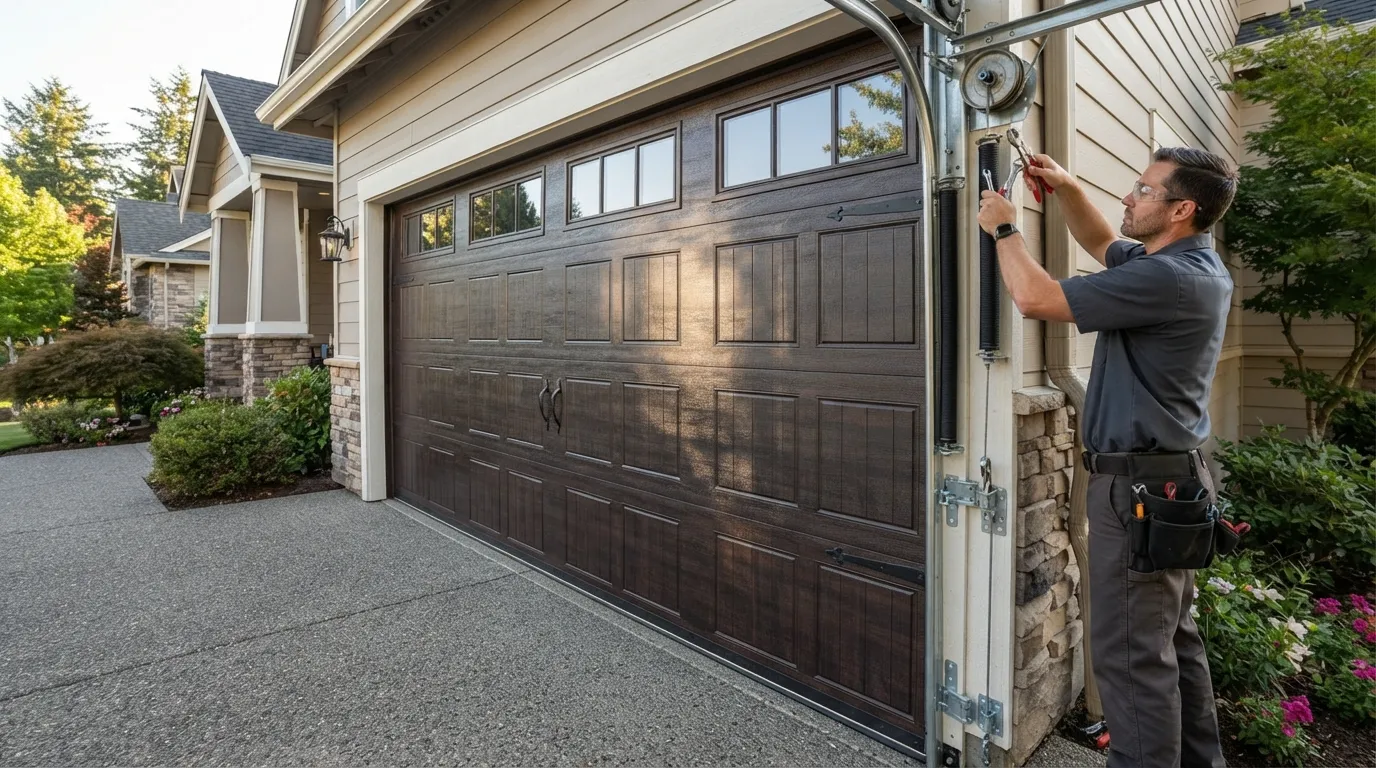
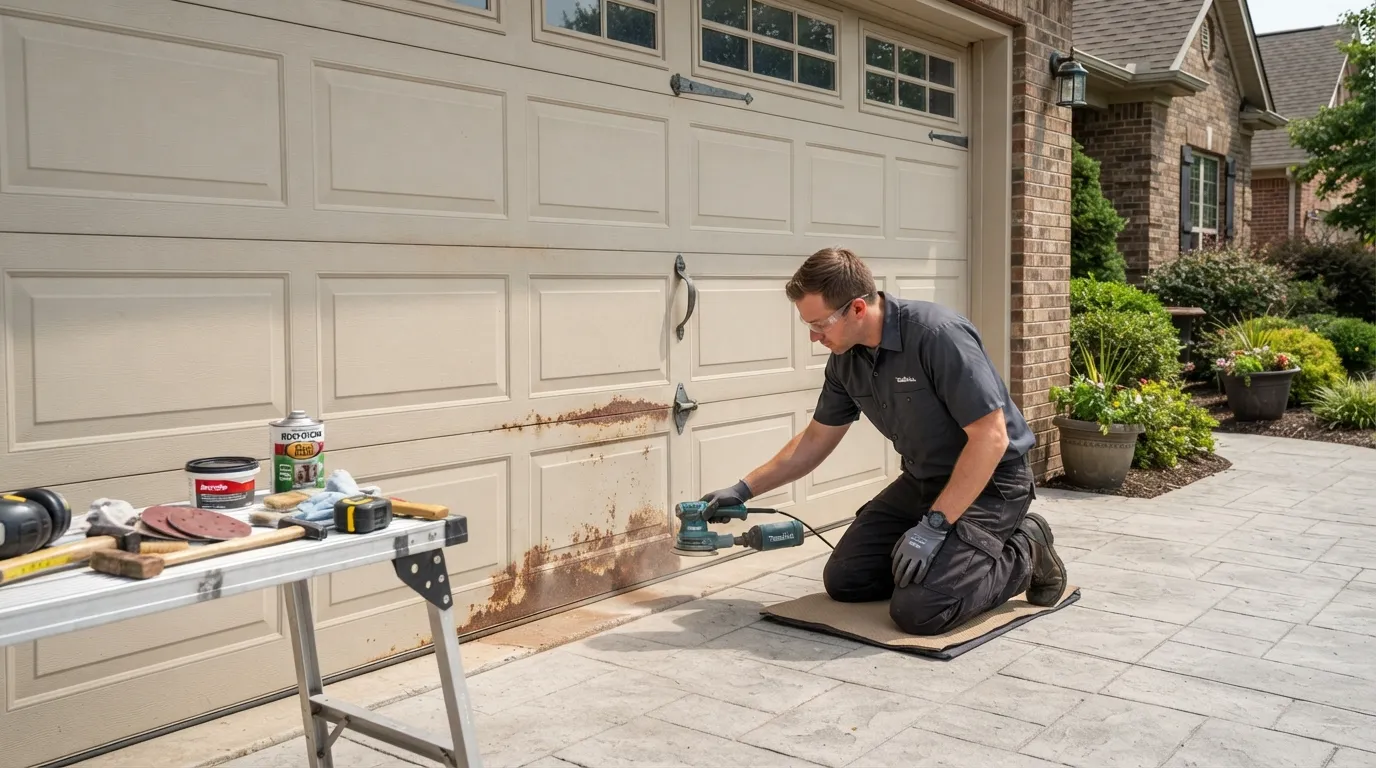
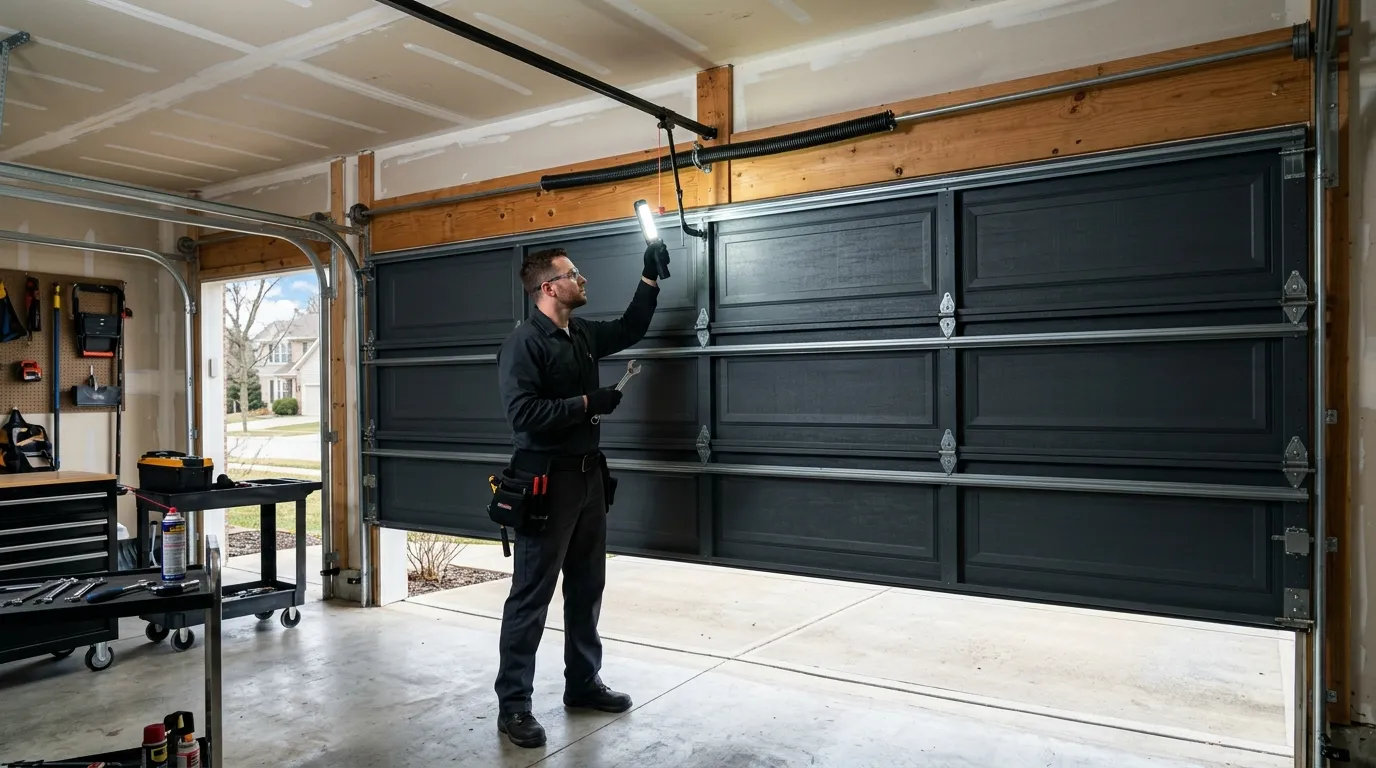
Most housing stock across this service area went up between 1990 and 2002, with a median build year around 1993 - F1, F2. That means a large share of the garage doors out there are original or one prior replacement, running galvanized cable that's now well past its expected service life. Add a severe HEAT climate band, and you get a specific failure pattern: garages here regularly sit well above outdoor temperature by mid-afternoon, and that heat cycles the cable's zinc coating and the grease on the drum day after day. The coating breaks down faster than it would in a mild climate, corrosion gets a foothold at the fray points, and the cable weakens from the inside before it looks bad from the outside.
This isn't a defect in any one door brand - it's what happens to 1990s-and-newer cable hardware sitting in a hot garage for three decades. Doors built to that era's standard specs weren't engineered around this level of sustained heat exposure, and it shows up as cable failure well before spring failure in a lot of these homes. It's one of the more predictable failure modes we see, precisely because the housing age and the climate point the same direction.