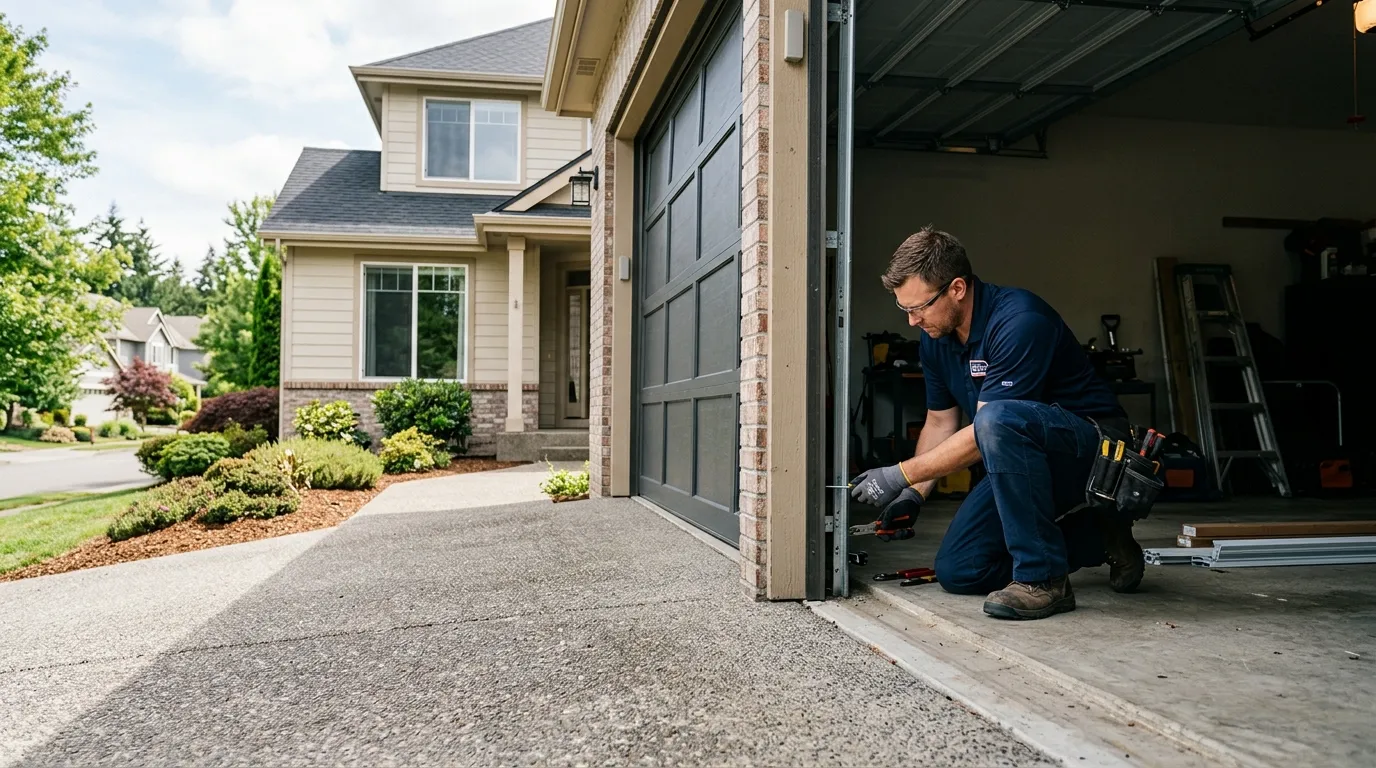
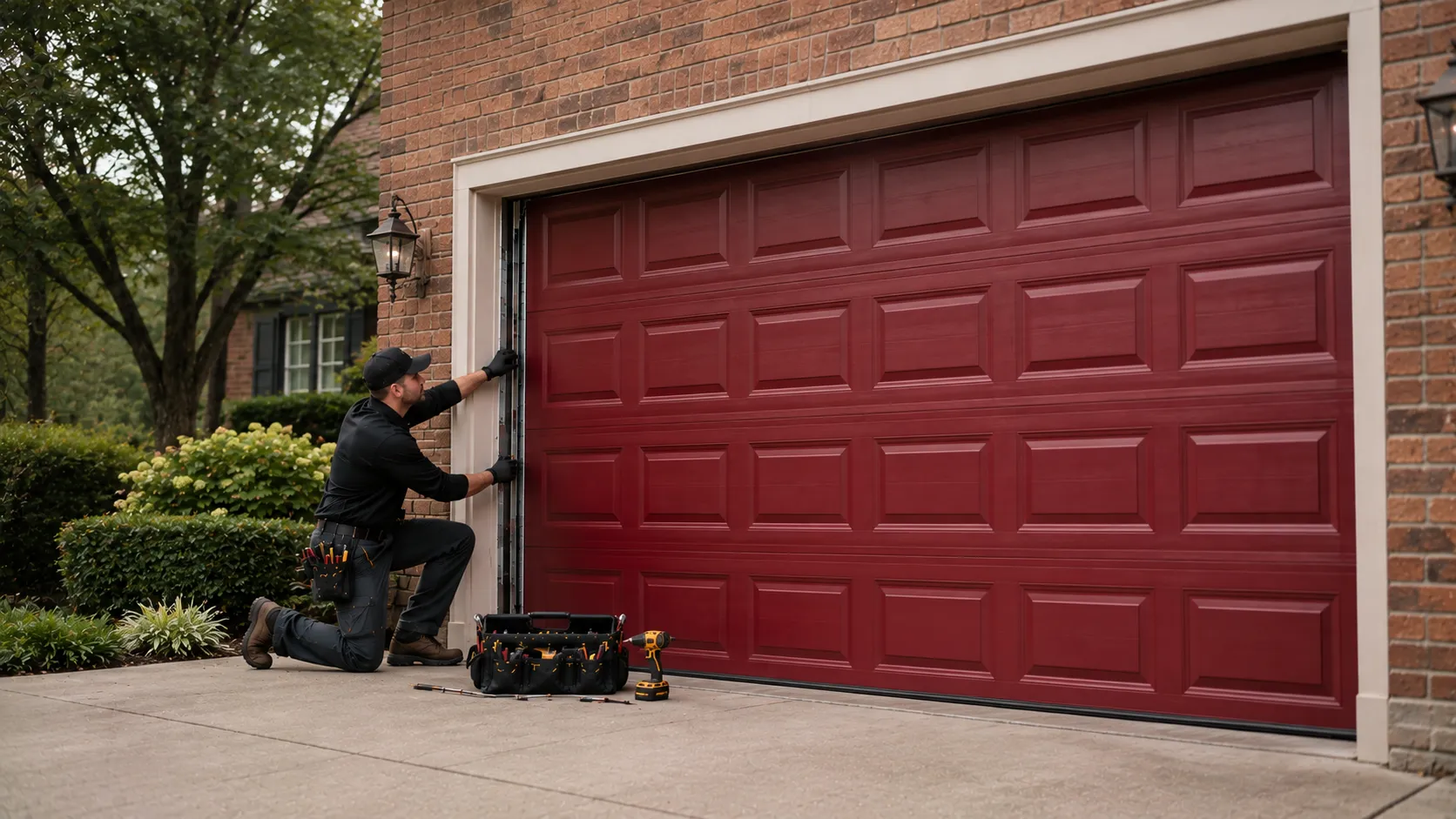
The fault we see most in Sacaton is a door that's doing its job the way it was built to, back when it was built. Most houses here went up around 1993, and builders in that stretch used single-layer steel panels with no insulation core. That was normal for the era. It's not normal for what a garage door has to survive on a 115-degree afternoon now.
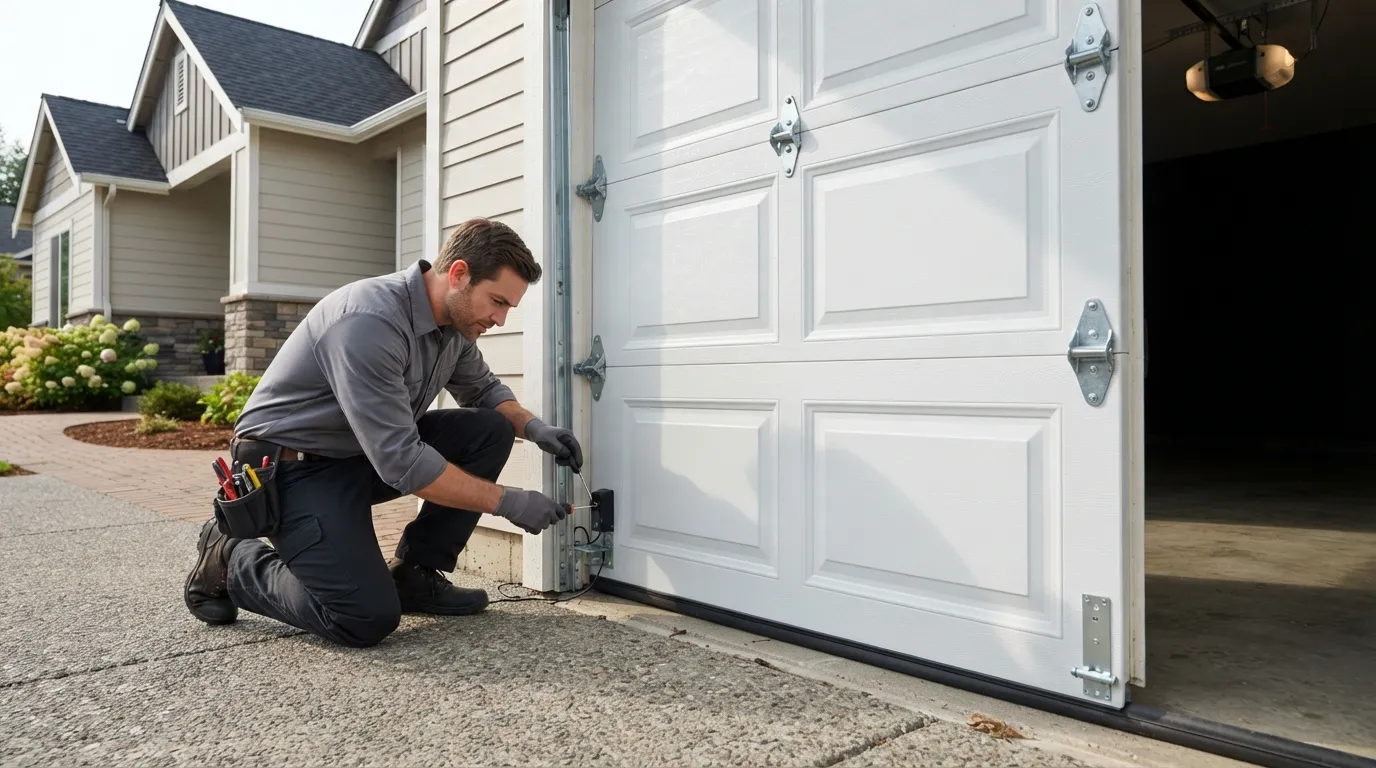
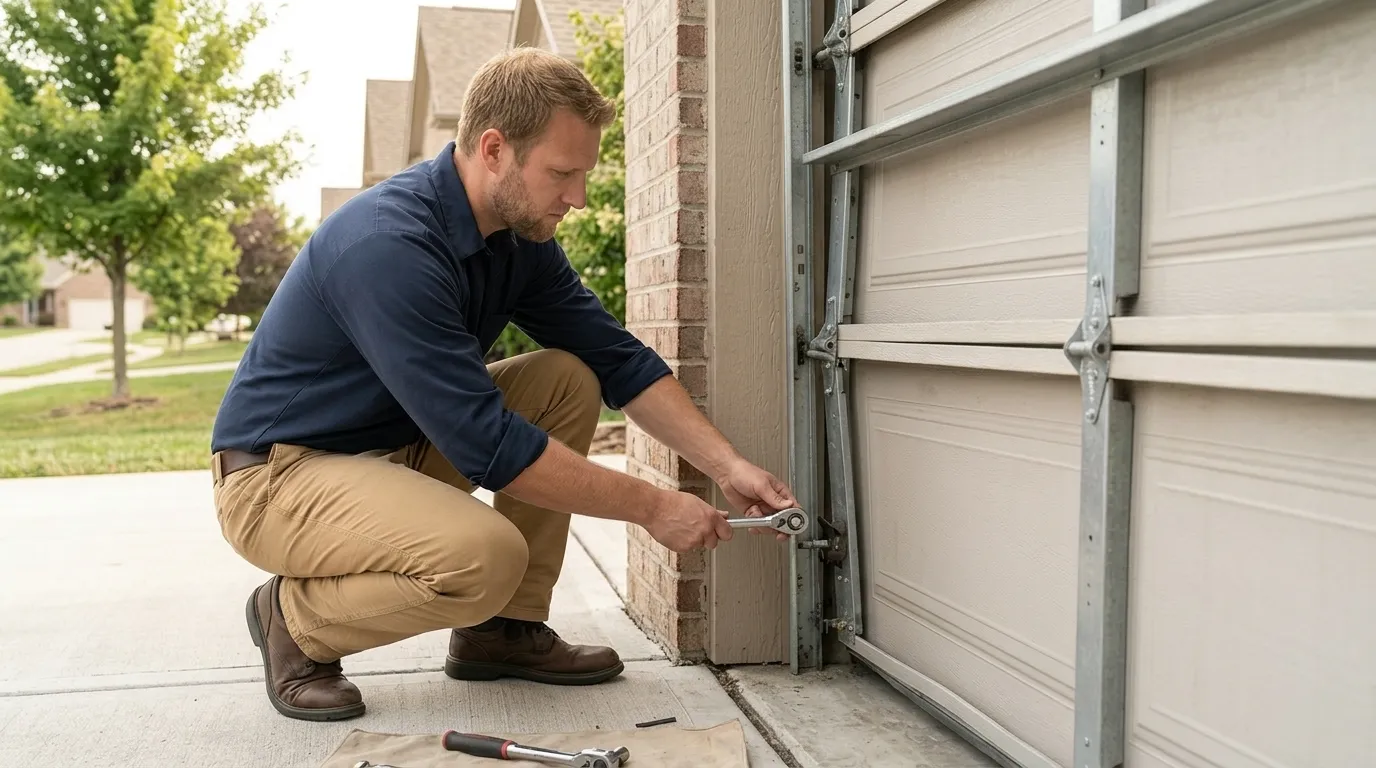
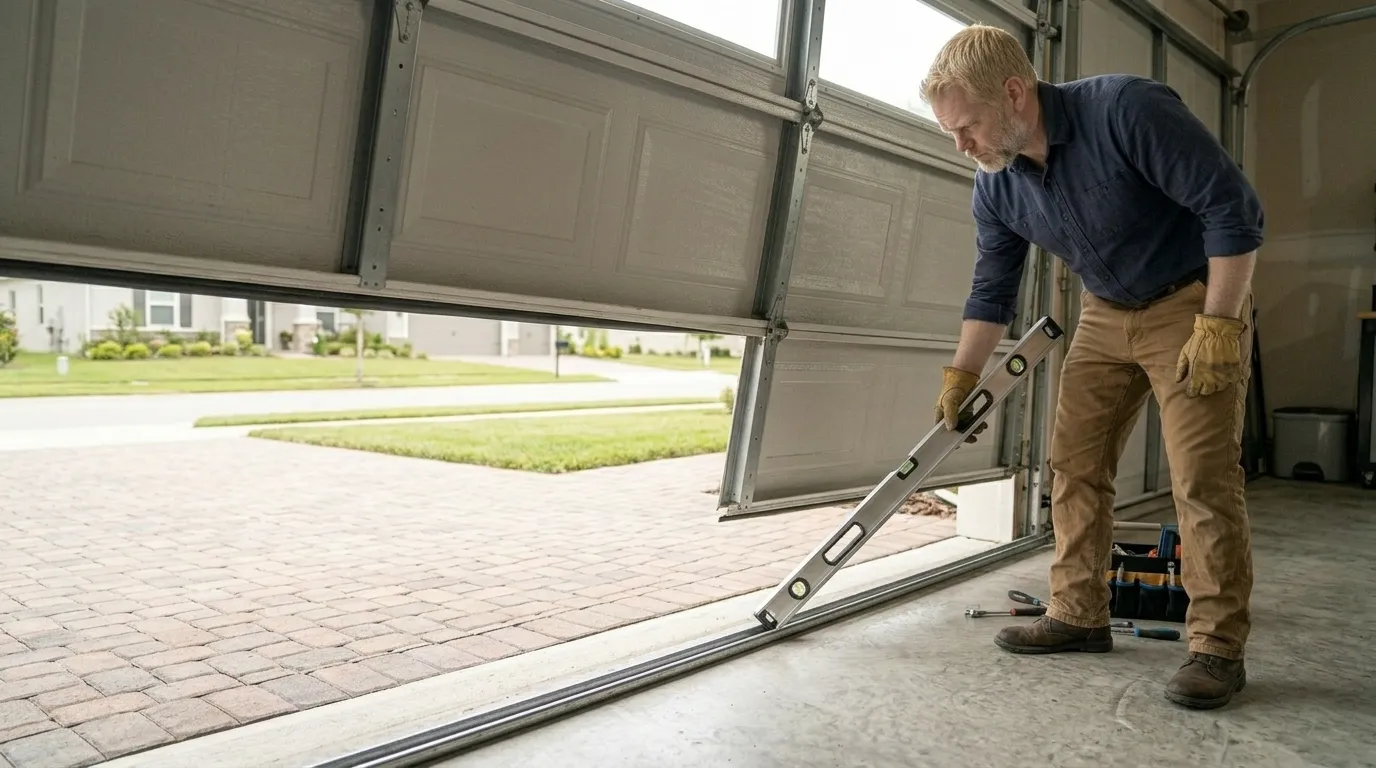
Without a foam core, the steel skin heats up, the panel warps slightly at the seams, and the door starts binding in the track. You'll notice it as a door that used to run smooth and now catches halfway up, or an opener that strains and reverses. It's not the opener failing - it's the panel expanding against hardware that was set thirty-plus years ago for a straight, cool metal sheet.
We're not guessing at this. It's the pattern that shows up when a neighborhood's housing stock sits in one narrow build window, which Sacaton's does. A repair on a door like this buys you a season, maybe two, before the same warp shows up on the next panel down.