
Guide
Original Garage Doors on Gilbert's 1990s Housing Stock
Most Gilbert houses went up between 1990 and 2002, before newer door insulation standards. Here's what that means for your original door in this heat.
Local detail
Leaving It Alone
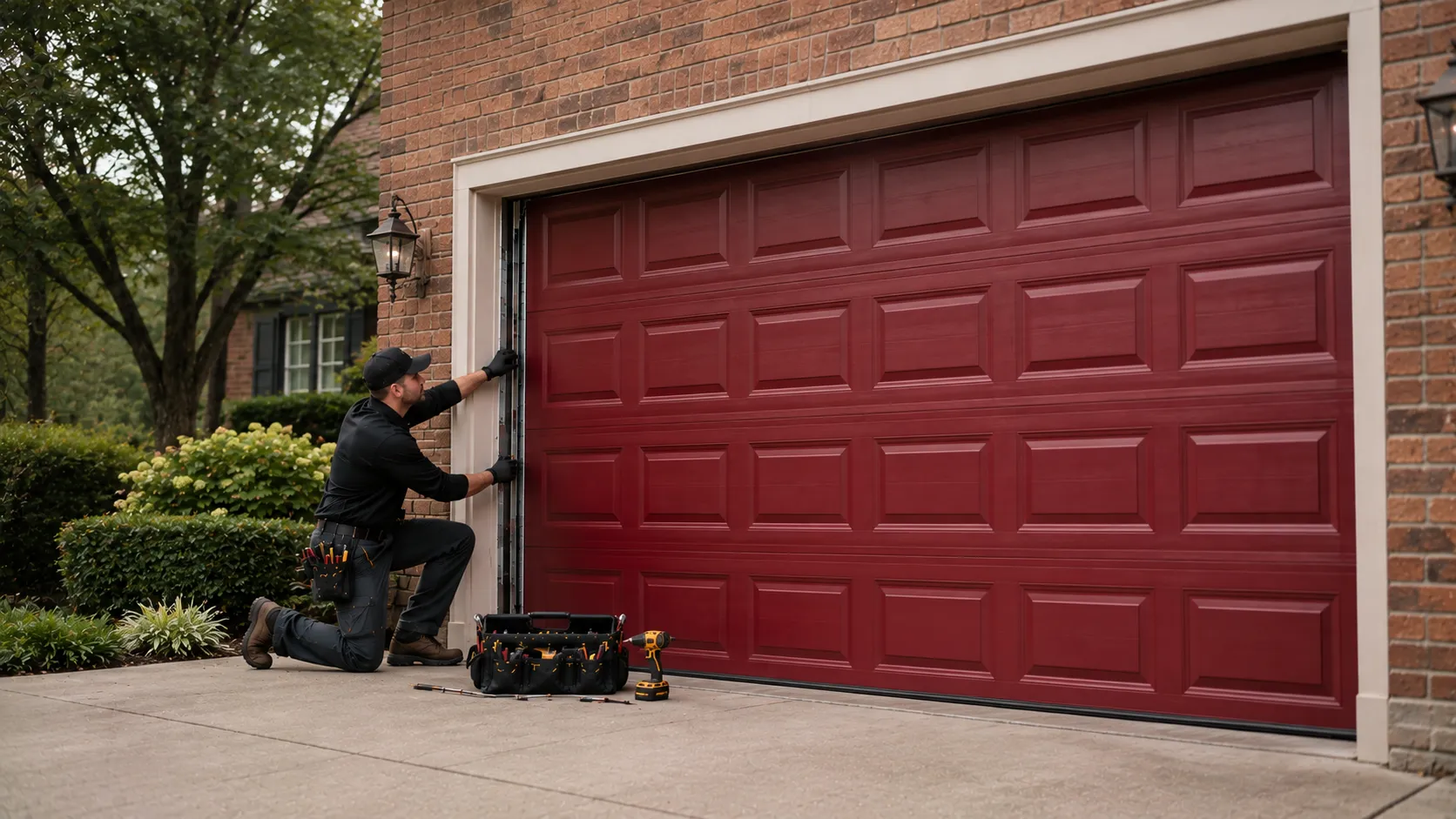
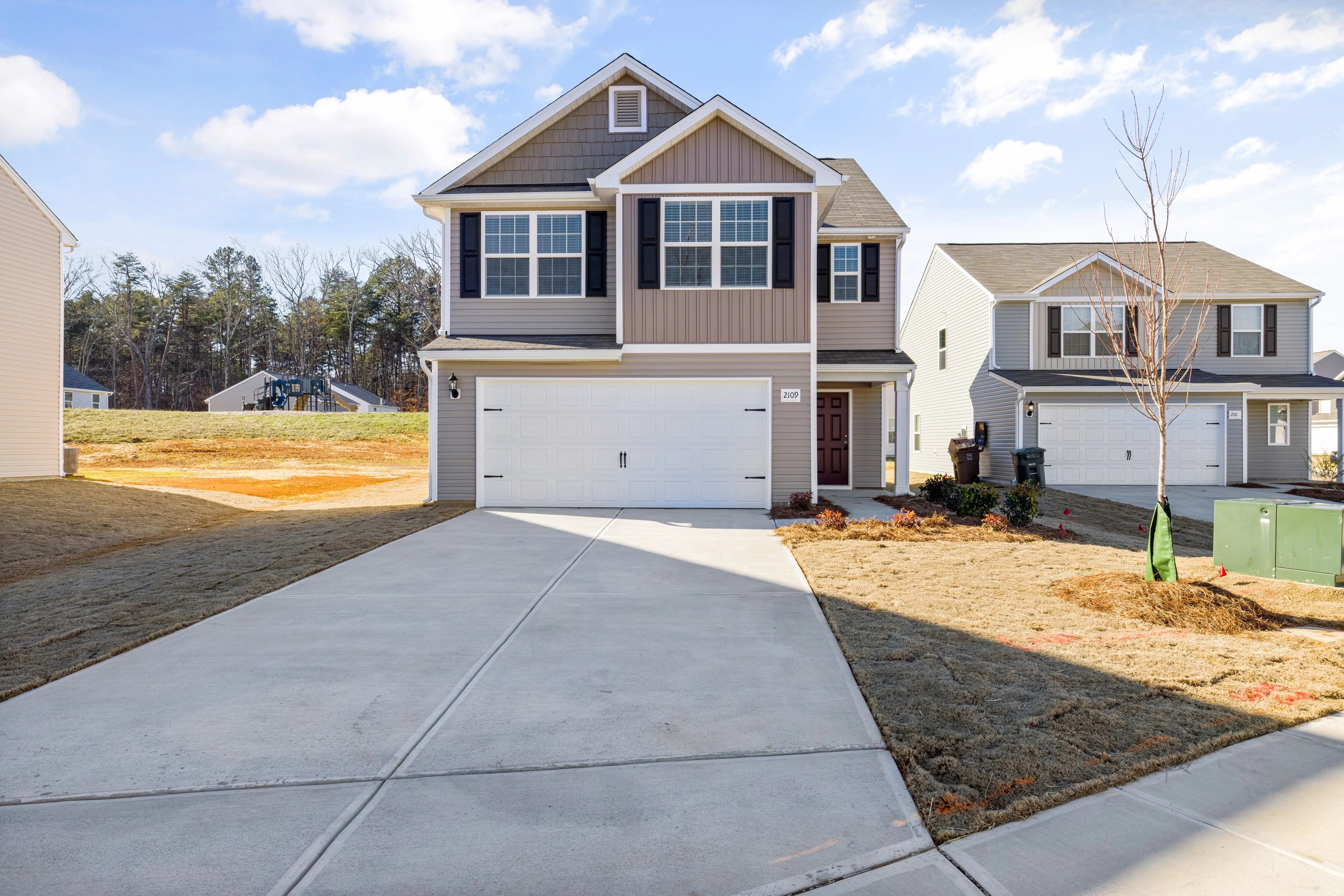
If your door still opens and closes without a fight, you don't need to touch it just because it's original. A lot of houses in this service area were built between 1990 and 2002, with the median landing around 1993, and plenty of those first doors are still hanging on their original torsion springs and tracks. If the panels aren't cracked, the rollers aren't grinding, and the opener isn't straining, there's no job here. Age alone isn't a reason to replace a door. What matters is whether the door was built to any insulation standard at all, and for houses from this era, a lot of them weren't.
The steel skin doors that shipped standard in the early-to-mid 90s were single-layer, no foam core, no thermal break at the bottom seal. That's not a defect. It's just what the code required, or didn't require, at the time. Leaving a door alone that still functions is fine. Leaving it alone because you assume it's insulated because the house looks newer than a 1960s ranch is where people get surprised at their utility bill.
The area
Where People Go Wrong
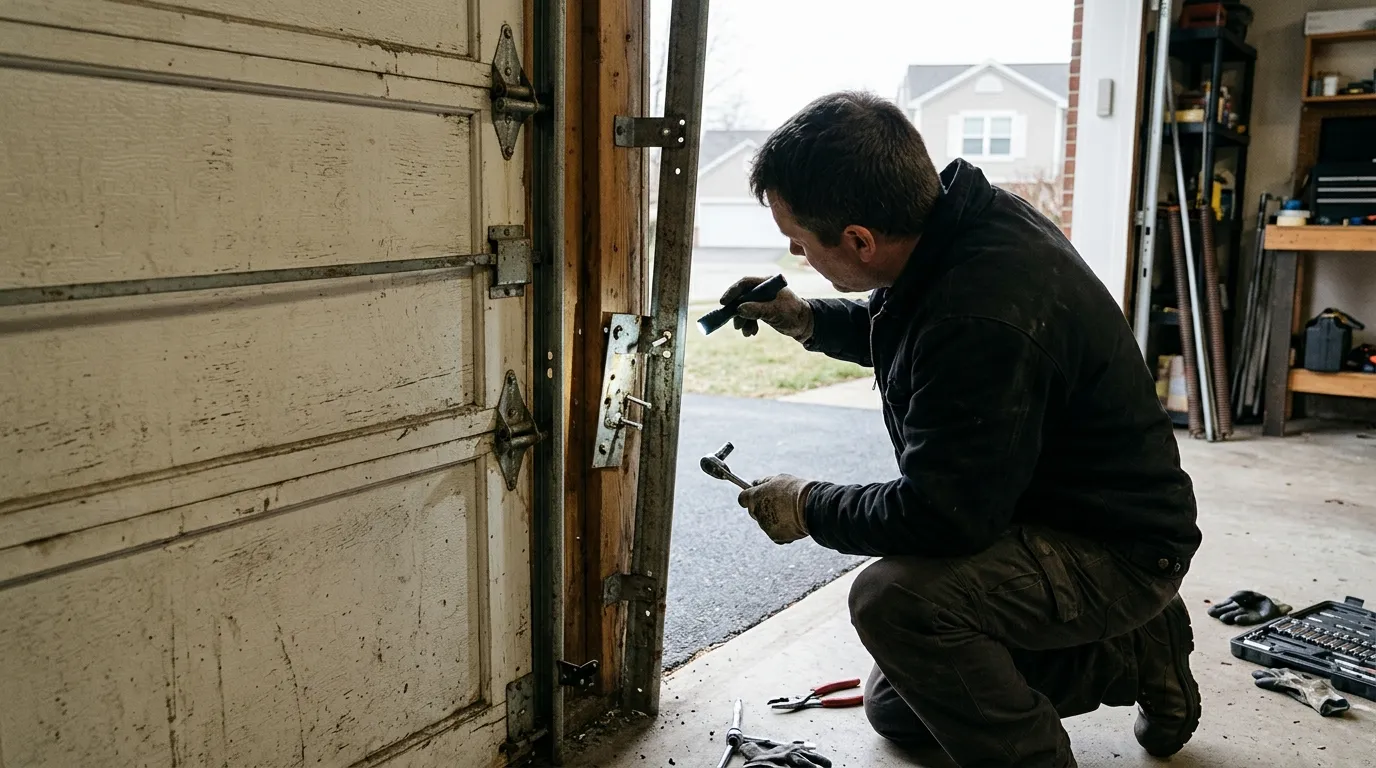
The mistake we see most in Higley Pointe, Morrison Ranch, and Power Ranch, all built out in that same 1980s-90s wave, is homeowners replacing a broken spring or opener and assuming the door itself is fine because it's not that old. A door from 1993 isn't old by East Valley standards, but it can still be a single-layer steel slab with an R-value close to zero. People fix what broke and leave the actual thermal problem in place, because nothing about a bad seal or an uninsulated panel throws an error code.
It just costs money every July. The other mistake is buying a like-for-like replacement door without checking the insulation rating, because it's cheaper and it matches the house style. That gets you a new door with the same old heat problem in five years instead of twenty.
We won't talk you into a full insulated replacement if your garage isn't attached to living space or climate-controlled, since the payoff isn't there. But if your garage shares a wall with a bedroom or laundry room, that's the detail that should drive the decision, not the door's age.
What we find
How Local Conditions Play In
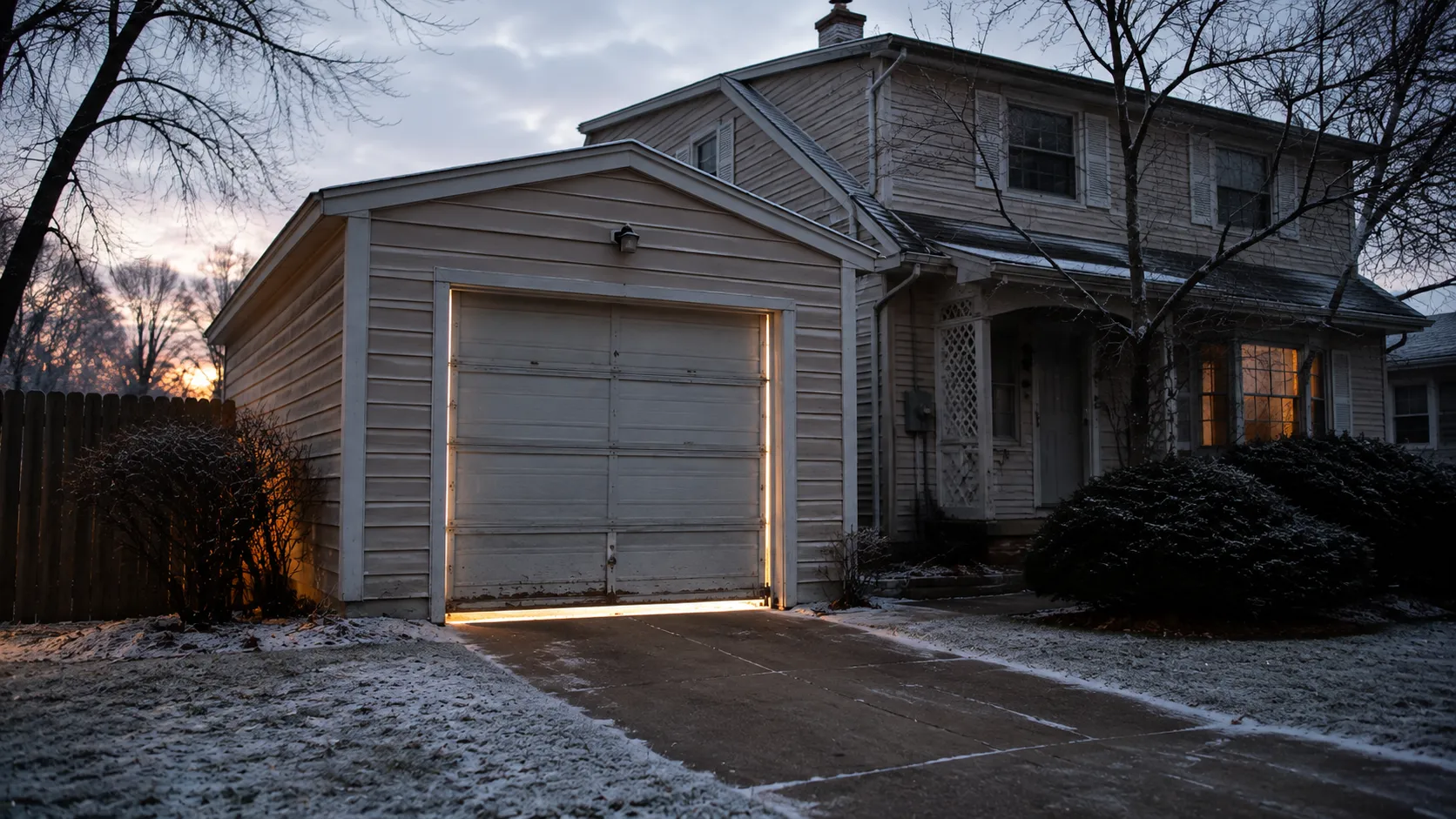
This area sits in the severe end of the heat band, and that changes what an uninsulated door actually costs you versus a milder climate. A single-layer steel door heats up fast in direct sun, and if it's on an attached garage, that heat load transfers through the shared wall for hours after the sun's off it. Houses built in the 1990-2002 window here often have the garage functioning as a de facto thermal buffer for the house, whether the original builder accounted for that or not.
When the door itself is doing none of the insulating work, the buffer doesn't buffer much. This isn't a coastal or high-desert climate where a bare steel door is a minor inconvenience. It's a stretch where an insulated door with a tight bottom seal measurably changes how hard the AC has to work on the rooms nearest the garage.
We're not going to tell you it'll cut your bill by some specific percentage, because that number depends on your garage's exposure, your insulation elsewhere, and how you use the space. But the physics of severe heat plus a bare steel panel are not in question.
How we work
The Situation
Across the service area there are roughly 33,459 households and about 20,703 owner-occupied houses, with median household income around $63,545. That's the practical backdrop: most people here aren't gutting a garage for a full remodel, they're deciding whether to fix, insulate, or replace a door that's doing its job mechanically but not thermally. If your door dates to the original build and still runs fine, the honest move is often to add a bottom seal and weatherstripping rather than replace the whole unit, and we'll tell you that on the call if that's what fits.
Full replacement makes more sense once springs, rollers, and the opener are all aging out together, or if the garage borders living space and the heat load is a real problem. One limitation worth saying outright: we don't retrofit foam insulation into an existing single-layer steel skin. Once that door's up, insulating it properly means a new door, not an add-on kit glued to the old panel.
Questions
Common questions
Is my garage door original if my house was built in the early 90s?
A lot of houses from that build era still have their original door, especially if springs and openers were replaced separately over the years. Check the inside of the panel for a manufacture sticker or ask us to look - if it's single-layer steel with no foam backing, it's likely original to the house.
Does an insulated door actually matter in this climate?
In a severe heat climate like this one, yes, especially if the garage shares a wall with living space. An uninsulated steel door absorbs and holds heat for hours after direct sun hits it, which pushes that heat load into the house through the shared wall.
Can you add insulation to my existing door instead of replacing it?
Not properly. Foam-core insulation is built into the panel at manufacture. Kits that glue foam board to an old single-layer skin exist, but they don't perform like a real insulated door and we don't install them.
Ready when you are
Need a garage door sorted in Gilbert?
Gilbert Garage Door Co repairs and installs garage doors, springs and openers in Gilbert, AZ and the surrounding area.